The Colour Wheel Guide: How to Match Your Saree and Blouse
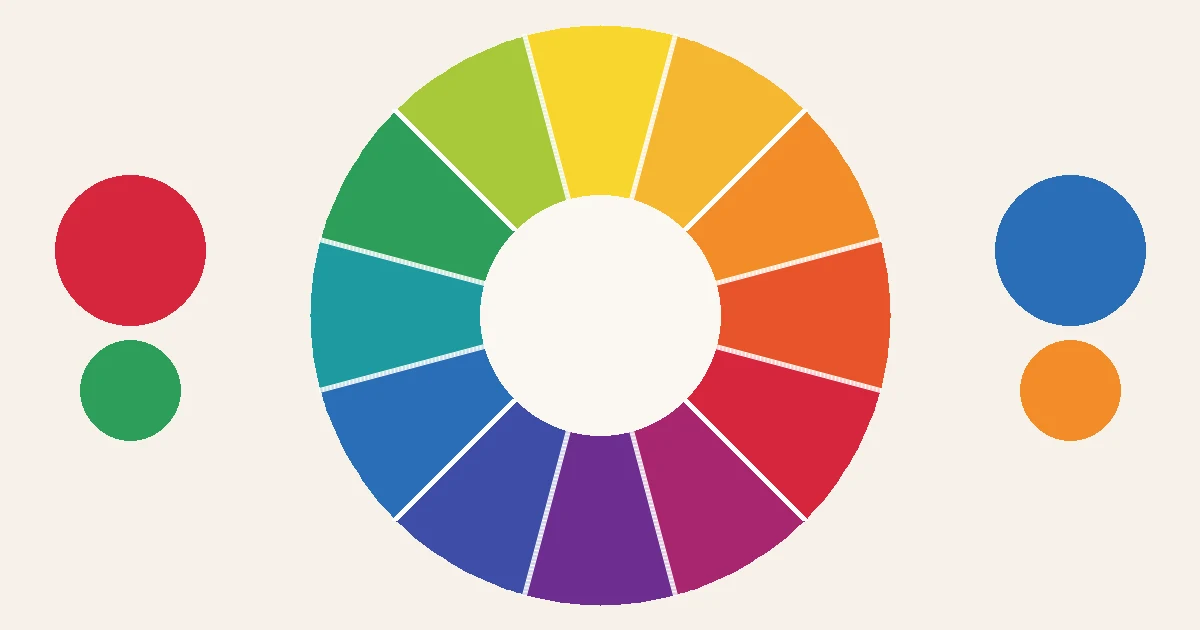
The blouse decides whether a saree looks planned or accidental. Most of us choose by instinct, and instinct is often right, but when you are unsure the colour wheel is the quickest way to check. Designers use the same wheel to pair any two colours, and it works just as well for sarees and blouses.
The colour wheel in two minutes
Every colour on the wheel comes from three starting points:
- Primary colours: red, yellow and blue. Nothing else makes them.
- Secondary colours: orange, green and purple, made by mixing two primaries.
- Tertiary colours: the in-between shades, such as teal, magenta or yellow-green, made by mixing a primary with a secondary.
Once you can see the wheel, a saree and blouse pairing becomes a question of distance: how far apart the two colours sit.
Four ways to pair a saree and a blouse
Monochromatic
Different shades of one colour: an ink-blue saree with a powder-blue blouse. Calm, polished and almost impossible to get wrong. A good choice for office and family functions.
Analogous
Colours that sit next to each other, like a bottle-green saree with a teal blouse, or mustard with orange. Soft and fresh, with just enough change to look intentional.
Complementary
Colours that face each other across the wheel: red with green, yellow with purple, orange with blue. This is the bold one. Keep the blouse plain and let the contrast do the work.
Triadic
Three colours spaced evenly around the wheel, such as a mustard saree, a purple blouse and an orange border. Playful and festive. Let one colour lead and keep the other two small.
When in doubt, go neutral
Not every saree needs a colour experiment. These shades sit quietly beside almost anything and are the safest blouse choices for a busy print or a heavy border:
A tip from the loom: look closely at the border and the pallu. Almost every handloom saree has one thread colour in the border or zari that you can lift for the blouse. A blouse in that colour always looks like it belongs to the saree.
Which pairing for which occasion
| Occasion | Pairing to try | Example |
|---|---|---|
| Office, everyday | Monochromatic or analogous | Ink blue with powder blue; green with teal |
| Family function | Analogous, or a neutral blouse | Mustard with orange; any saree with a cream blouse |
| Festival and pooja | Complementary | Maroon with deep green |
| Party, celebration | Triadic, kept small | Mustard saree, purple blouse, orange border |
| Evening | Dark saree with an antique-gold blouse | Navy with gold |
Five quick checks before you decide
- Skin tone. Hold the blouse colour near your face in daylight. If your face looks brighter, it suits you; if it looks tired, try a shade lighter or darker.
- Fabric. Colours look deeper on soft silk because of its sheen, and flatter on cotton. A blouse in a different fabric from the saree can change how both colours read.
- Light. Check the pairing in daylight, then under a bulb. Some combinations that look rich in the evening look dull at noon.
- Season. Lighter, cooler shades feel right in summer; deeper jewel tones feel right in the festive months.
- Your wardrobe. A blouse you can wear with three sarees is worth more than one you can wear with one.
Screens never show a colour perfectly, so please read our colour note, and message us on WhatsApp if you want to see a saree in daylight on a video call before you order.
Try it with our sarees
Browse our cotton sarees for everyday pairings, the fancy and daily sarees for festive ones, and the Luxe collection when you want something richer. If you want pure silk, visit our silk store Silkromance.com.